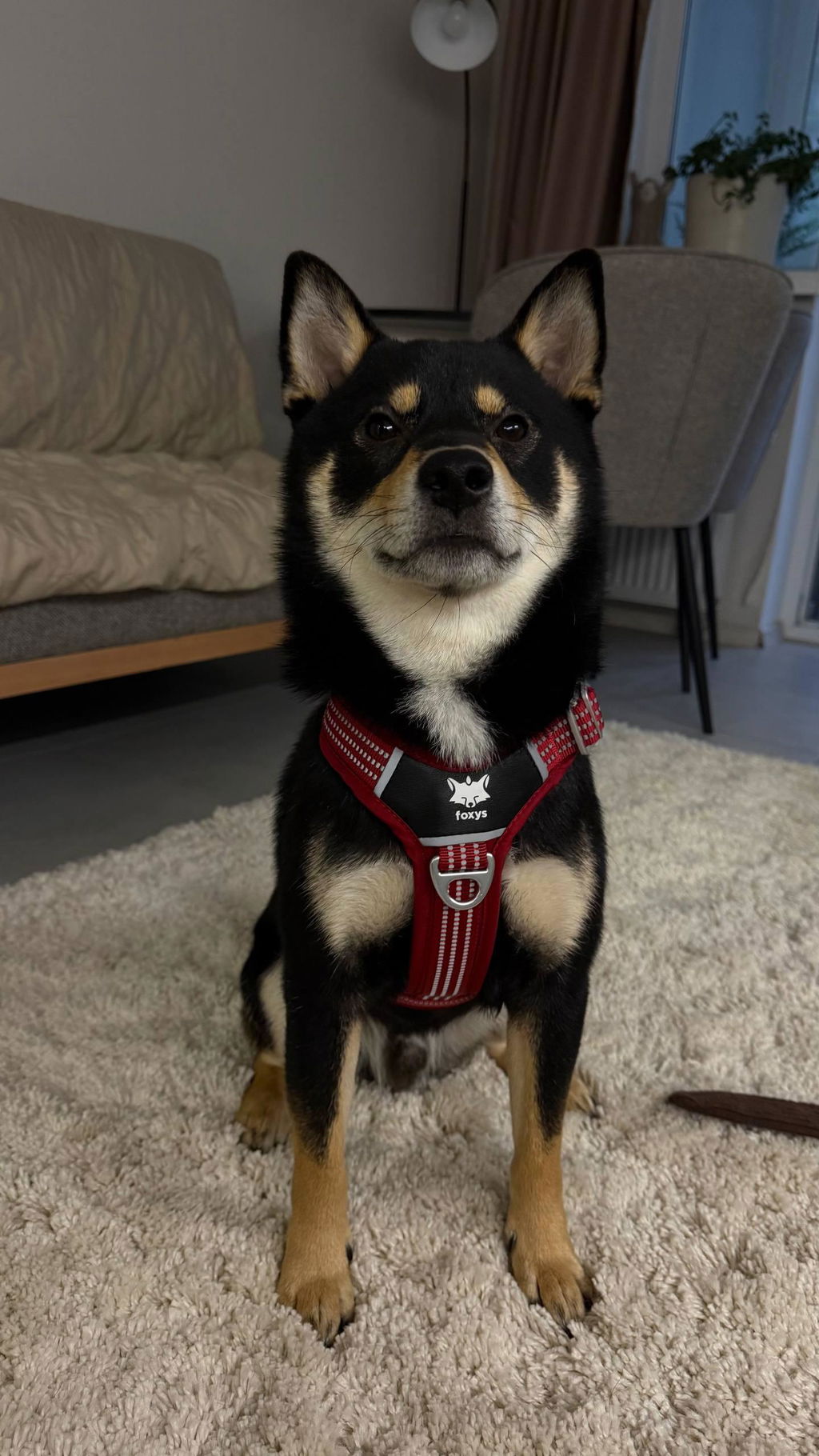
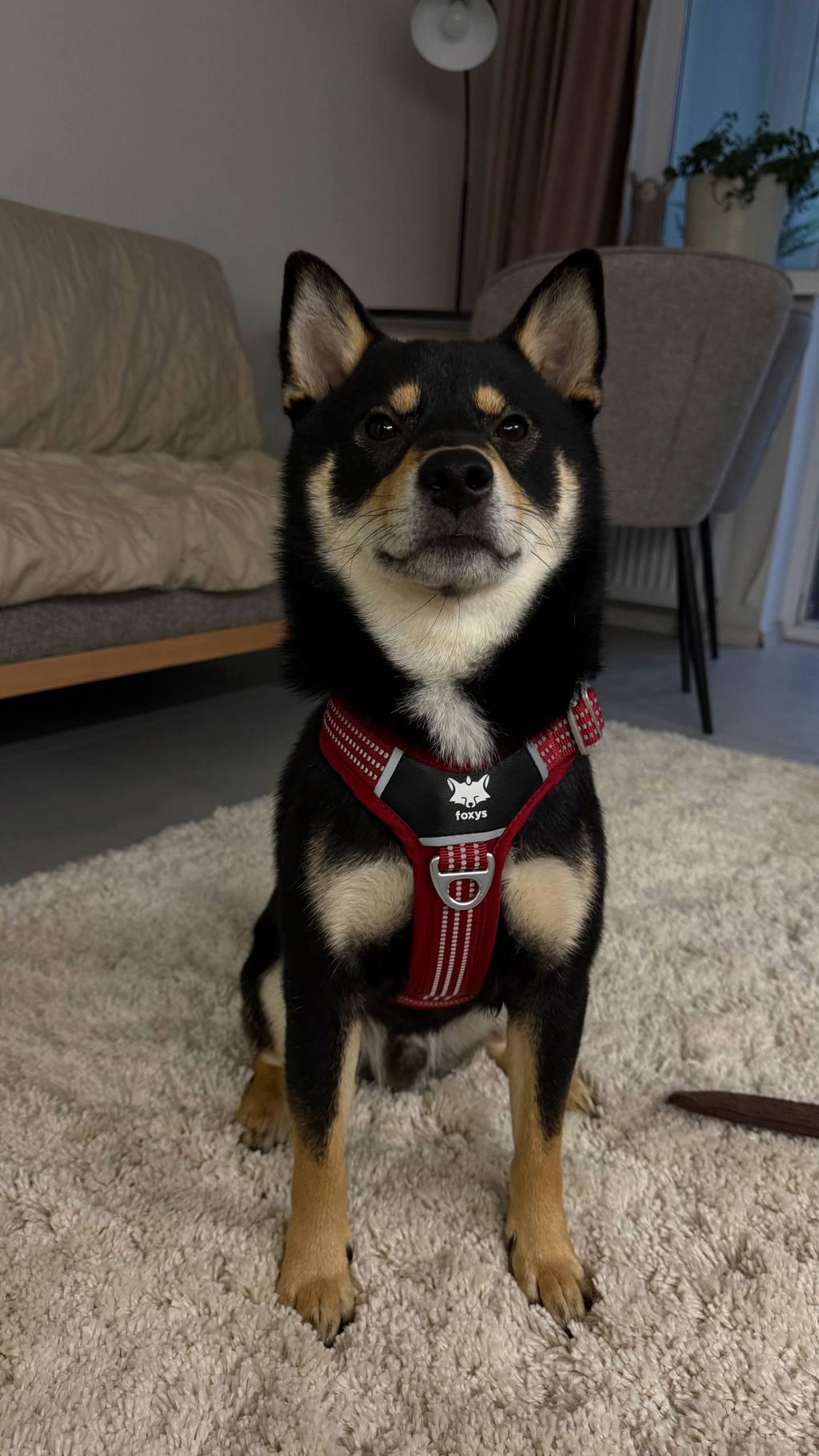
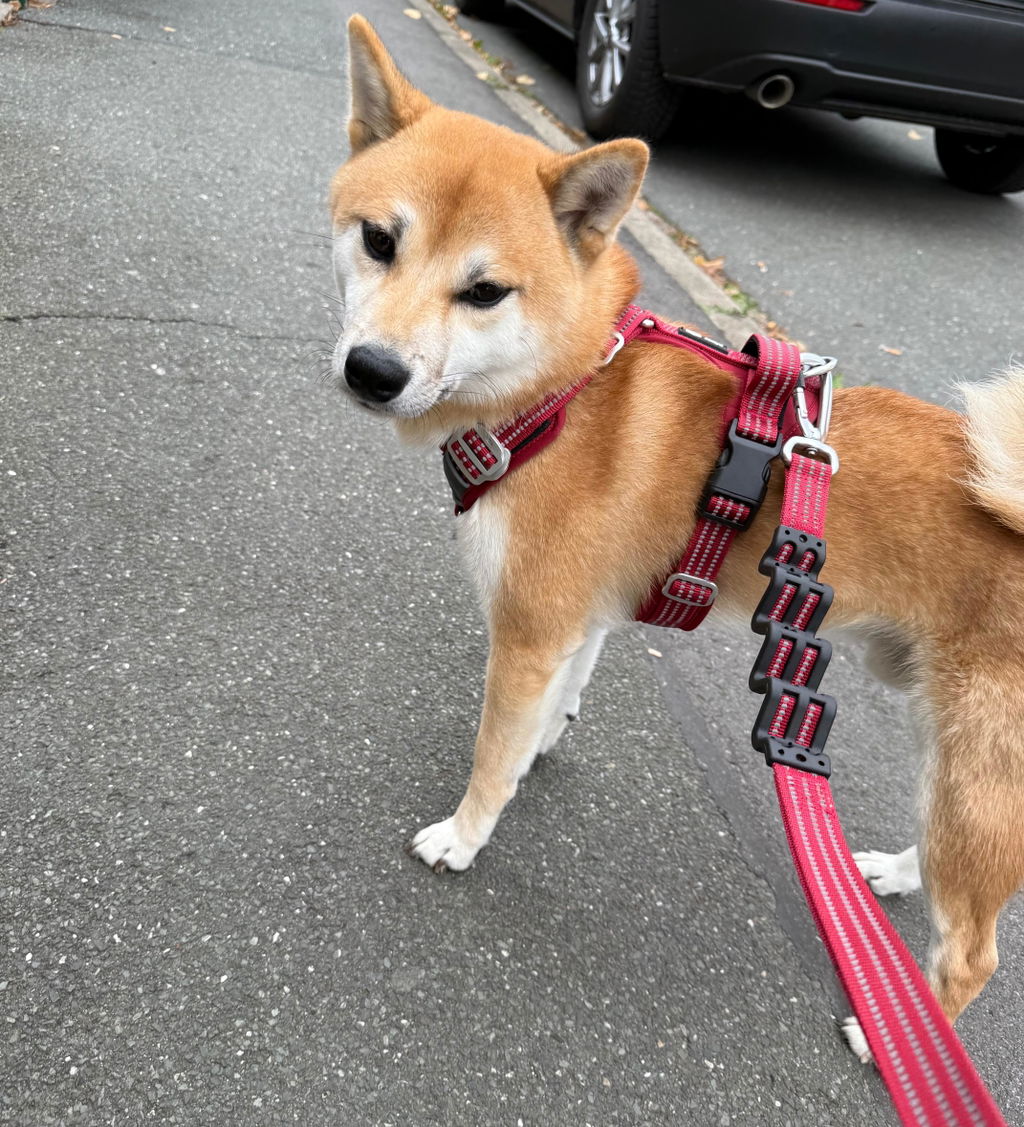
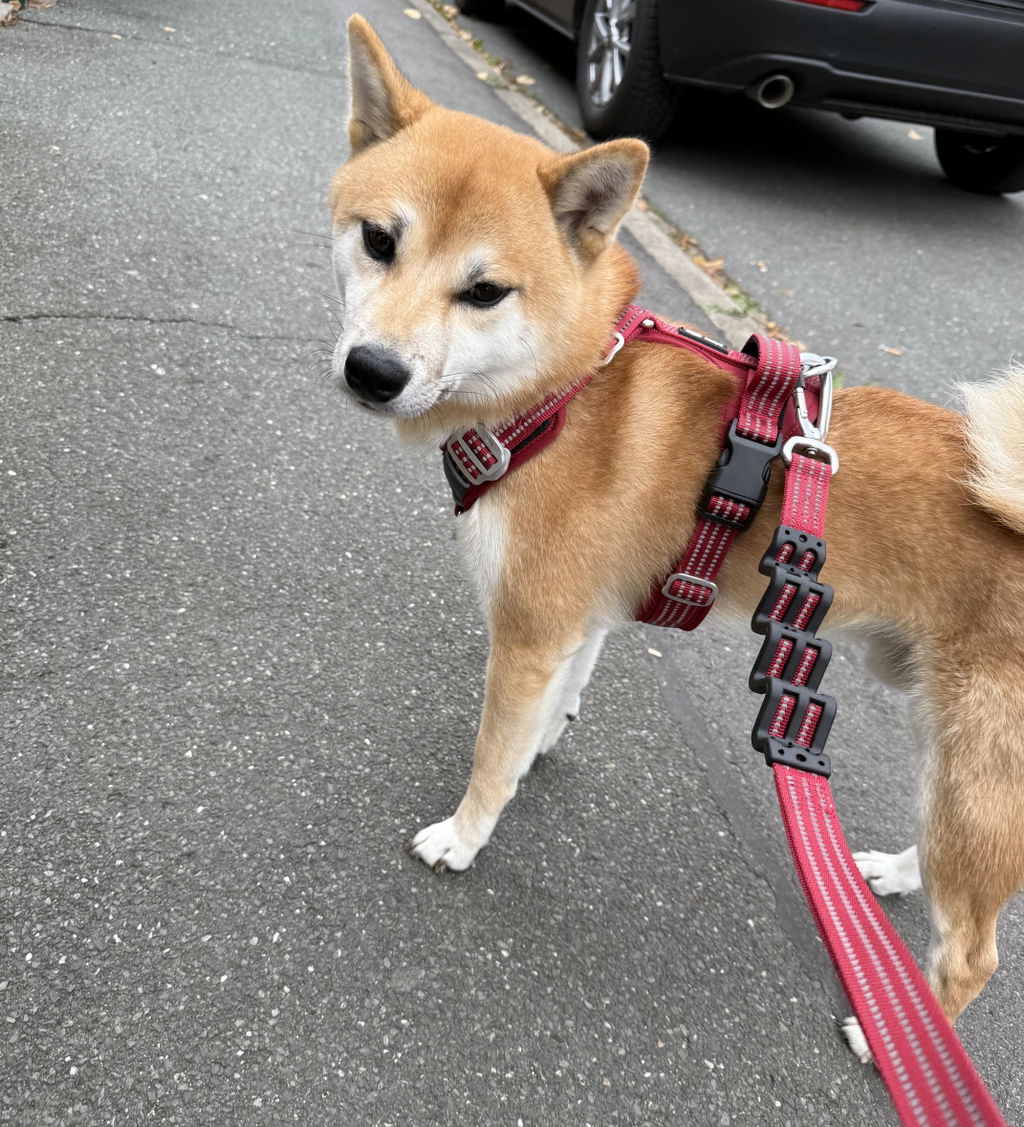
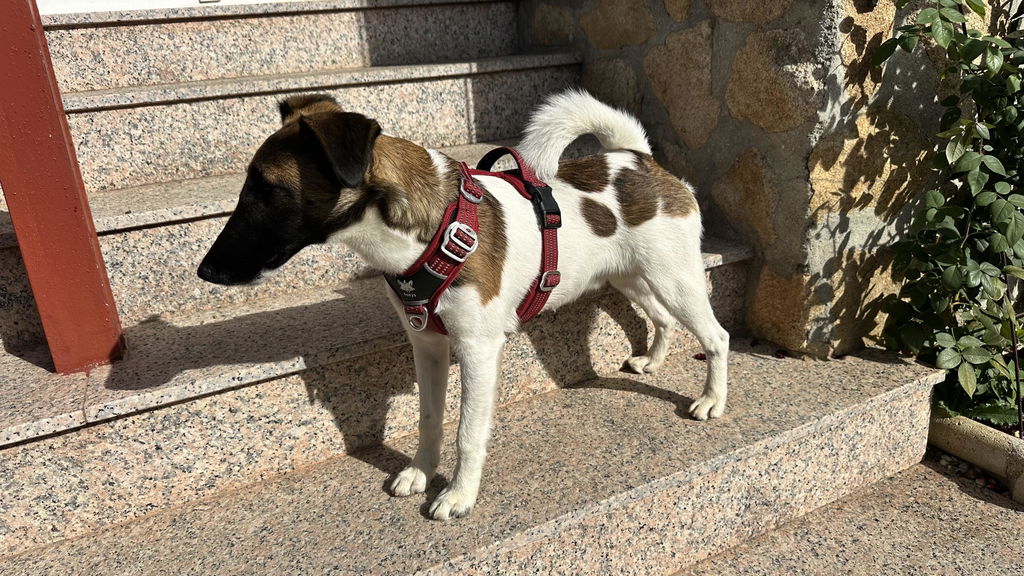
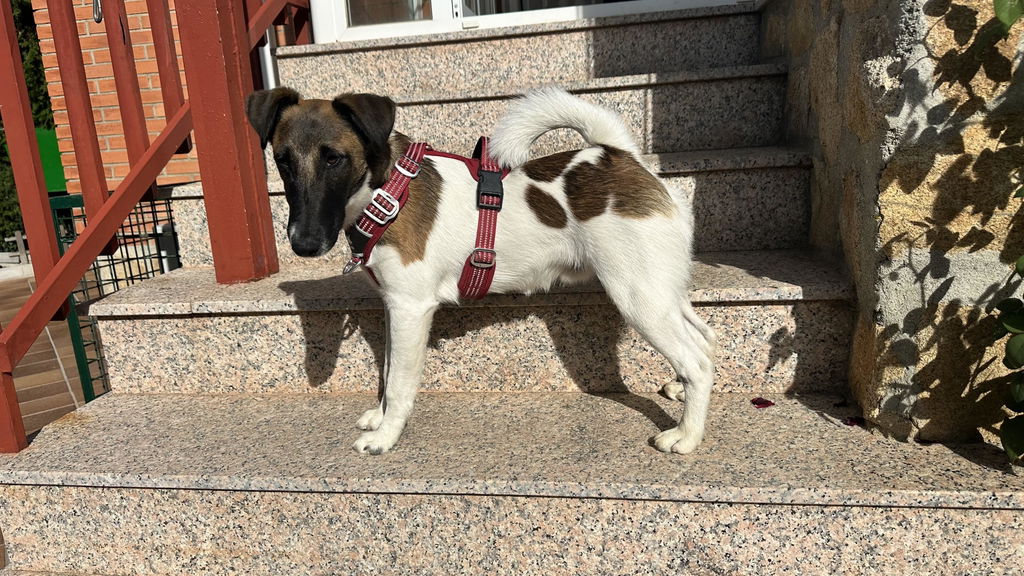
El arnés está siendo una felicidad para nuestro perro y para nosotros pues evita un montón de tirones
Your dog pulls on the leash because, to them, moving fast works: by pulling, they get to the smell, the park or the other dog sooner. The good news is that loose-leash walking can be learned at any age, with patience and consistency.
Quick answer: reward your dog every time they walk beside you on a loose leash, stop the walk as soon as they pull, and use an ergonomic harness with a front ring so you don't hurt their neck.

Practise in the living room or garden. Walk a few steps and reward when the leash is loose, forming a “J” between your hand and the harness.
The moment the leash tightens, stop walking and wait without pulling back. When it slackens or your dog turns towards you, reward and set off again.
If they ignore you, turn and walk the other way. They will learn that paying attention to you is what gets them moving.
Keep treats always at hand, for example in a treat pouch with waste bags, so you can reward in under a second. Then gradually space out the treats.
Move on to a quiet street, then the park and finally areas with other dogs. Short, positive sessions work better than long walks full of struggle.
💡 Patience: it is normal to have setbacks around strong stimuli during the first few weeks. What matters is consistency from the whole family, always using the same rules.
If your dog pulls, concentrating the force on the neck with a collar can irritate the trachea. An ergonomic harness spreads the pressure across the chest. If you are unsure, read harness or collar: which is better.
The CountryFox PRO includes a front ring for anti-pull walking and padded neoprene. The CountryFox PRO leash has a shock-absorbing spring that softens tugs and an aluminium carabiner with a safety lock. Both are part of the Walking Kit.
⚠️ Avoid: retractable leashes while training. They teach the dog that pulling gives more line.

It depends on the dog, their age and your consistency. With short daily sessions, many dogs improve within a few weeks, although it takes longer in environments with lots of distractions.
It helps with control and protects the neck, but it does not replace training. It works best combined with rewards and consistency.
Harness with a front ring for anti-pull walks and padded neoprene.
Shop harnesses
Para cualquier raza, mide siempre el contorno del cuello y del pecho. Si tu perro está entre dos tallas, elige siempre la superior.
| Talla | Cuello (Neck) | Pecho (Chest) |
|---|---|---|
| XS | 22 - 30 cm (8 - 12 in) | 34 - 46 cm (13 - 18 in) |
| S | 28 - 40 cm (11 - 16 in) | 44 - 56 cm (17 - 23 in) |
| M | 36 - 50 cm (14 - 20 in) | 54 - 68 cm (21 - 27 in) |
| L | 44 - 58 cm (17 - 23 in) | 66 - 82 cm (26 - 32 in) |
Talla XS: Cachorros o Shibas muy pequeños (< 7 kg).
Talla S: La medida de la mayoría de Shibas adultos (7 - 11 kg).
Talla M: Shibas grandes o machos corpulentos (11 - 15 kg).
Talla L: Shibas extra grandes o mezclas (> 15 kg).

Cachorro de Shiba Inu — Talla XS

Caniche Toy — Talla XS

Shiba Inu Estándar — Talla S

Bulldog Francés — Talla S

Robust Shiba Inu — Talla M

Border Collie — Talla M

Dálmata — Talla L

Golden Retriever — Talla L